Tuesday, 12 October 2010
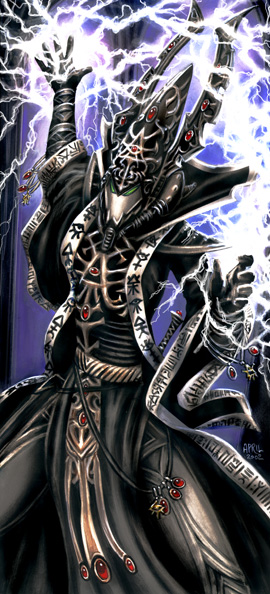
Different assassin skill sets/classes
I have been thinking more about different classes or skill sets that could be used within the comic. A consideration was to allow the player to choose their career path or which one of the different castes they wish to follow.
I have produced six seperate castes and have been trying to come up with ideas for scenes and interactions that could be incorporated into each. I plan on updating this and have been asking friends for their input as well, if anyone wishes to comment I'd be more than happy to consider any suggestions.
Monday, 11 October 2010
Nemesis - Horus Heresy novel
As per usual I tend to read books pretty often and get sucked into novels, I started reading this book, Nemesis a day or two ago and am currently about halfway through. It is set in the Warhammer 40k universe and is the latest installment to the Horus Heresy novels (a collection of books detailing the most dramatic event in Warhammer 40k history set 10,000 years in the past). What I have found interesting in the book, as well as it being a good read is that it is based on a group of assassins that are gathered from the 6 different disciplines contained within that universe. These are as follows;
Vindicare Temple - sharpshooters, specialists in sniping and marksmanship.
Callidus Temple - chameleons, specialists in infiltration and impersonation.
Eversor Temple - berserkers, unsubtle drug-fueled killing machines.
Culexus Temple - Pariahs, psykers are their exclusive targets.
Venenum Temple - specialists in poisoning their targets.
Vanus Temple - intelligence-gatherers, in matters of strategy and tactics their insight is unparalleled. They often assassinate their targets indirectly using their intelligence and knowledge to bring down targets.
I found such information useful as my comic's main character happens to be an assassin and this has given me a pretty good insight to the views of such a character, perhaps I could open up the story and allow different directions and decisions that could tie in with the different specialities above, allowing multiple ways to perfrom their mission.
Week 6 Objectives
This weeks objectives are as follows;
- The structure will have been decided.
- The interactions will have been decided.
- Develop a structure.
- Start creating/developing scenes.
- Start developing interactions.
- Start creating concept characters.
- Start creating character profiles.
- Start creating storyboards.
- Start work on colour theory templates.
Week 5 Recap
Week 5 Objectives
I have been looking at different types of structure and have decided that the comic will be presented in 2 parts as far as the structure is concerned, this is due to the first part of the story acting as an introduction where the user will be introduced to the leading character, find out what has happened to the character, learn additional information that may be of use to them and help them decide on what route they wish to make events progress down. The first part of the structure that will be used within the introduction will use flashbacks to good effect, filling in what has already happened and bringing the reader up to speed with the story. These will involve some interactions but the storyline will not divert in the first two flashbacks at all. I am considering allowing the story to go separate ways in the 3rd flashback but each of the paths although may end in different events will have to produce the same outcome with the main character being captured. The 2nd part of the structure will be focusing on the character's escape from their captors and how they wish to go about it. They could flee the confines that they have been held in making the best of their escape, try to complete their mission by accomplishing the task they were sent there to do in the first place, or take out their vengeance on their captors and leave as much damage in their wake as possible. There will also be a variety of different plot points in between these outcomes that could sway the storyline either way depending on the reader's actions. There will also likely be different endings that will be developed, giving the comic some replay value that will bring the reader back to play through the comic again and see how they can do things differently.
I have been researching different drawing styles, the traditional anime, realistic anime and chibi. I have decided that I wish to try and produce a realistic style of drawing where the characters' proportions are correct and keep them as close to being real as possible, this may prove hard to do but I intend to attempt such a style of drawing.
I have been using my books that I purchased 'Manga for Dummies' and 'The Complete Book for Drawing Manga' as a reference when it comes to drawing characters, I have found some very useful tips and advice that I intend to make use of. I have also started attempting to draw some characters although more time and work needs to go into this.
I have been looking at different Manga and Anime that I intend to use a a reference, they usually have action scenes done quite well in them and I think this will be a great help when it comes to producing animated action or any other scenes for that matter. I have been looking at such things as Cowboy Bebop, Ghost in the Shell, Affro Samurai, Dragonball Z, Gundam Wing, Hellsing and Vampire Hunter D. These tend to have plenty of action in them and as I fully intend my comic to also contain a good deal of action they should prove to be useful.
I have begun developing the story, the flashbacks are almost complete but may require a little fine tuning. The escape and onwards still requires a lot of development but I already have the structure in place all that is required is to produce some additional scenes that will give the user some interesting interactions and story lines to play around with.
I have begun writing the report part of writing I had planned to complete but it does require more work. It has to be produced for Tuesday (tomorrow) to give my supervisor and idea of my critical writing level. I plan to complete this today and if possible try and produce some drawings.
Research into InteractionsResearch into StructureResearch into drawing stylesResearch into drawing charactersResearch into Anime/MangaBegin developing a story- Produce a piece of report writing
I have been looking at different types of structure and have decided that the comic will be presented in 2 parts as far as the structure is concerned, this is due to the first part of the story acting as an introduction where the user will be introduced to the leading character, find out what has happened to the character, learn additional information that may be of use to them and help them decide on what route they wish to make events progress down. The first part of the structure that will be used within the introduction will use flashbacks to good effect, filling in what has already happened and bringing the reader up to speed with the story. These will involve some interactions but the storyline will not divert in the first two flashbacks at all. I am considering allowing the story to go separate ways in the 3rd flashback but each of the paths although may end in different events will have to produce the same outcome with the main character being captured. The 2nd part of the structure will be focusing on the character's escape from their captors and how they wish to go about it. They could flee the confines that they have been held in making the best of their escape, try to complete their mission by accomplishing the task they were sent there to do in the first place, or take out their vengeance on their captors and leave as much damage in their wake as possible. There will also be a variety of different plot points in between these outcomes that could sway the storyline either way depending on the reader's actions. There will also likely be different endings that will be developed, giving the comic some replay value that will bring the reader back to play through the comic again and see how they can do things differently.
I have been researching different drawing styles, the traditional anime, realistic anime and chibi. I have decided that I wish to try and produce a realistic style of drawing where the characters' proportions are correct and keep them as close to being real as possible, this may prove hard to do but I intend to attempt such a style of drawing.
I have been using my books that I purchased 'Manga for Dummies' and 'The Complete Book for Drawing Manga' as a reference when it comes to drawing characters, I have found some very useful tips and advice that I intend to make use of. I have also started attempting to draw some characters although more time and work needs to go into this.
I have been looking at different Manga and Anime that I intend to use a a reference, they usually have action scenes done quite well in them and I think this will be a great help when it comes to producing animated action or any other scenes for that matter. I have been looking at such things as Cowboy Bebop, Ghost in the Shell, Affro Samurai, Dragonball Z, Gundam Wing, Hellsing and Vampire Hunter D. These tend to have plenty of action in them and as I fully intend my comic to also contain a good deal of action they should prove to be useful.
I have begun developing the story, the flashbacks are almost complete but may require a little fine tuning. The escape and onwards still requires a lot of development but I already have the structure in place all that is required is to produce some additional scenes that will give the user some interesting interactions and story lines to play around with.
I have begun writing the report part of writing I had planned to complete but it does require more work. It has to be produced for Tuesday (tomorrow) to give my supervisor and idea of my critical writing level. I plan to complete this today and if possible try and produce some drawings.
Sunday, 10 October 2010
Story/ Structure
The story for my comic is starting to take form, I have a basic storyline that I want the reader to be able to follow throughout the comic. Throughout this storyline they will be given different instances where they will have to interact with different items or characters in order to further the story or decide upon what direction that it will take.
I have also produced some background material for the different factions and characters involved. I have taken advice from Alan Moore book Writing for Comics in that the writer needs to create a believable world and know everything about it before they set out to determine a story and this is what I have done, although more information could possibly be added. While the reader/user may not be privy to this information in whole or even at all through the entire process it is important that the writer knows it so that they can create a believable world where everyone has their own goals and agendas, how different social classes operate and view one another, the social hierarchy etc. therefore i made sure I had the different factions agendas and goals planned out before I had started on the main storyline that the character would progress through and this in turn helped me develop and produce ideas for the main storyline. the user/reader will not be given the backstory straight away although they may be able to discern parts of it through different interactions that will produce them with more information.
I have decided upon a series of flashbacks acting as the introduction to the story, the first scene will introduce the reader to the main character that has got themselves into a certain predicament and is being asked questions by their captors. These questions will trigger a series of flashbacks that will enlighten the user as to how the story progressed thus far and how the character got captured in the first place as well as what they were doing there. I feel that such a method will be much more intriguing to the reader and they will want to know why, what and how the character got to this point, being interrogatted by their captors for answers that only the reader and the character be privy to.I want to capture the readers interest and believe that such a structure to begin with will help fullfill this with the intention that once the flashback scenes have passed the reader will be hooked and wish to find out what happens next.
During these flashbacks the user will be able to interact with characters/environments/items and learn more information from them. Sadly though as open as I would like to make the different branches of storyline from these sections they will always have to come back to the present with the character being a captive. This allows some difference in the information that can be discovered by the user but the storyline will have to stay close to the same throughout the flashbacks. However after these scenes I intend to give the user much more control over the character and how the story progresses depending on their actions.
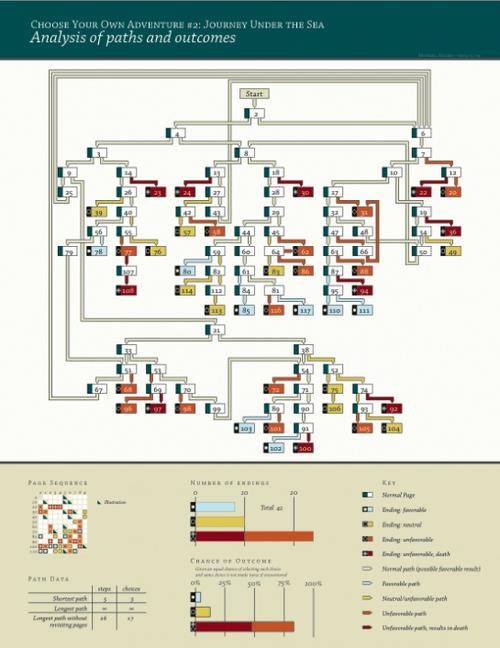
below I have attached a diagram of the structure that will be involved for the flashback scenes. It is shown that although the reader will have some control over events they will have to eventually be reigned back into the main plot point in order that the flashbacks still make sense.
Wednesday, 6 October 2010
Developing Story/Characters
From my experience in playing tabletop and role playing games with a few friends I already had a collection of characters that we usually would usually use and over the course of about 6 years each of those characters has built up a wealth of background stories, relationships, rivalries as well as some interesting plots and story lines that we would often play through, usually without a predetermined ending in sight as it was always more interesting to see how the characters managed to escape with their hides intact from the latest adventure. I have also produced various short stories involving one or more of the characters during the past few years as well as making an attempt at writing a short novel. Sadly the novel fizzled out as I didn't know where I wanted to go with it toward the end which I put down to letting the character's actions decide the outcome in a game, it doesn't work quite so well in a novel though.
Through such games I also have some experience in creating worlds, giving the gamer a meaningful task or objective and suitable reasons for them wanting to carry out said task, while throwing various other elements into the mix such as characters with conflicting goals, different factions beliefs, social structure and hierarchy as well as a bunch of other things that I can't think of off the top of my head.
The point I am getting at is that I already have an assortment of different established characters that I could use within the comic, maybe a few tweaks and the odd change here and there to make them a little more suitable but I imagine for the most part they will work well.
Week 5
I need to make a better effort to keep this updated on time as I have noticed that the updates are begining to slip and be a little later than intended. From now on weekly updates will be posted every monday, detailing the week's tasks.
Week 5 Objectives
By the end of week 5 I intend to have completed the following:
Week 5 Objectives
By the end of week 5 I intend to have completed the following:
- Research into Interactions
- Research into Structure
- Research into drawing styles
- Research into drawing characters
- Research into Anime/Manga
- Begin developing a story
- Produce a piece of report writing
Monday, 4 October 2010
Writing for Comics Pt1
I have been reading Alan Moore's (creater of Watchmen, V for Vendetta, Miricleman and more) 'Writing for Comics' and have found the subjects that he raises to be pretty interesting and a great help when it comes to thinking about how to develop and create my own.
He dedicates the first chapter to 'The Basic Idea' although before we get into that he mentions the superficial similarities between comics and films as well as comics and books and how he thinks that comics are granted the oppertunity to make the best of both worlds in that all three sources tell a story. A film is restricted in that it has an allocated running time and there is only so much information that can be contained and absorbed within that time. Books don't suffer from this drawback as they allow the user to progress through the story at a pace suitable to them, soaking in all the information they wish and easilly being able to back track and re-read sections of the story again. Books however don't offer any visual stimulation. He mentions that "since our current society has a greater visual orientation than a literary one, a visual flow of narrative gives a much more immediate and involving sensory impact to the work in hand," and goes on to say that a comic book version would have in many ways the best of both worlds.
He makes a point that the idea behind many comics, books or even stories don't have to be deep, meaningful and significant and that the idea is in no way the plot of the story, a common missconception. Moore continues by saying that "The nature of the idea isn't really important, what is important is that there is an idea in there somewhere. It can be silly and frivolous, perhaps just a single gag idea or it can be complex and profound. The only thing that the idea should definately be is interesting on some level or another". I found this outlook to be quite interesting as it made me re think and re evaluate the previous ideas that I had already considered and how Moore's advice had changed my perception of them. this was also achieved when he talks about the human aspect, as it will be humans that will read it and in order to give the characters a much more human feel you should study your own behaviour and the behaviour of people and events surrounding you. He suggested doing this by taking a very long look at yourself, find out what makes you tick, note down your likes and dislikes, strengths and weaknesses, be as honest as possible, expose yourself to things that horrify you and dettermine exactly why they do and how they make you feel as well as why they make you feel such a way.
Reaching the Reader
The 2nd chapter he dedicates to reaching the reader, structure, pacing and storytelling. I found this section to be very useful as I have been looking into many of these key features while planning my own comic and found his opinion to be a great insight into creating a comic book. Moore mentions that "If you're going to spend a lot of time preparing a communication, it would perhaps be an advantage to at least spend a little considering the person to whom it is addressed." He follows this up with his dislike of the steriotypical writing to offend the least amount of possible people which most comics tend to suffer from, the reasons behind this is that the writer is over compensating being too fearful of alienating their audience when a suitable audience will eventually find and enjoy the comic as there are lots of different people out there with many different likes and disslikes, some are very easily offended and some are very hard to offend but the majority of us are somewhere in between. Another reason for his dislike of this sort of writing is that it makes the comic bland and uninteresting, theres generally very little depth in there to capture the readers' attention. Moore follows this up by stating that "Instead of thinking about what might possibly affect the reader negatively and then expunging any trace of it from the work, why not think about things likely to affect the reader positively?" Which I believe is a much better outlook to have when creating something.
Structure
As the book comes to structure Moore offers us a few seperate examples of work that he has used and seen, one being a basic elliptical structure, where the elements at the begining of the story mirror the events which happen at the end, or having a particular phrase or image used at the begining and end insetad. He mentions that such techniques give the story a sense of neatness.
Some of the other examples Moore gives are a story being told by seperate characters, depending on how much of the central action they happen to have witnessed individually. A centrepiece, where an abstract, poem or some other item acts as a centre piece and the story simply acts as a frame for it. He also mentions a style common used by Eddie Campbell where "he tends to give his stories a sort of informal anecdotal structure that mirrors precisely the way in which the stories are usually person to person, with bits of backtraking and wandering away from the point left intact." The last example mentions Phil Elliot as he describes his stories as having an "A" and "B" to define the start and finish. It's quite evident that structure can be applied to a story in many different ways, Moore even encourages the new writer to come up with their own styles and techniques as well as using tried and tested ones and see what works for you.
Storytelling/Pacing
Moore states "storytelling devices include transition scenes, pacing, rhythm, smoothness of flow and all other aspects that relate more to the story itself than to the unfolding of the events within the story." With this in mind I believe I will have to look more in depth at some of these fields as there are some I did not originally consider. My favourite quote from Moore shortly follows, reading "As I see it, a successful story of any kind should be almost like hypnosis: You fascinate the reader with your first sentence, draw them in further with your second sentence and have them in a mild trance by the third. Then, being careful not to wake them, you carry them away up the back alleys of your narrative and then when they are hopelessly lost within the story, having surrendered themselves to it, you do them terrible violence with a softball bat and then lead them whimpering to the exit on the last page."
Shortly after he talks about some storytelling techniquess that he commonly uses or sees to disguise the change in scenes, his most used one being overlapping dialogue, where a character finishes saying something on one scene and a word or phrase is repeated in another scene by a different character as he mentions it does a far better job than constantly using "Meanwhile back at the such and such..." which diminishes the feel of immersion for the reader, quickly reminding them that they are reading a story. "One thing I tend to do which eases the transition and is sometimes all thats needed to accomplish a good transition is to write in basic units of a single page". By this Moore means that he conceals the transition within the turn of a page. he also mentions Hitchcock's stunning device where the heroin of the story finds some old corpse, opening her mouth with an intake of breath to scream only to cut to a motorcycle reving up in place of the scream. This is a very obvious transition and isn't hidden at all but it adds to the story and makes it more interesting as the sudden change is surprising to the viewer. While I do find all the information on transitions useful I do not believe that I will have to hide many of them as my comic will be interactive, although there may be the odd static transition that will have to be disguised. Moore again encourages the writer to try their own hand at different techniques as certain things can work for certain people. "You can introduce elements that actually disturb the flow of your story and still get them to work in the context of the story as a whole."
Another noteable storytelling technique that Moore describes is fight scenes and how the introduction of text can really bog down the pace of a fight scene and make it slow and dull pretty quickly. He encourages image to image with as little dialogue as possible as it adds the illusion with static pictures of action taking place at a fast pace.
Updated Plan
I have updated my project plan, adding milestones and tasks for the 2nd semester, however I fully expect that it will have to be updated again once I have an idea of the extra tasks that need to be added during the 2nd semester. The review of my learning contract brought to light that I wouldn't necesserilly have to build a working prototype and that it would just be creating extra work for myself.
This allowed me to free up some extra time to focus on other aspects of the project which has worked to my benefit as I have decided that I need to spend some more time focusing on the structure as it is a much more important aspect than I previously had thought.
Sunday, 3 October 2010
Interactions with Games
I have been looking at different flash games over this week to help gain an idea of how different interactions could be used within a game.
Sneak Thief
Sneak Thief was one of the first games I looked at. It's a point and click adventure game where you have to escape from a locked room by using items that you find within the room. I did find some of the interactions pretty good with mini games that you have to get the combination correct in order to open a locked drawer etc. Although did find that it became rather frustrating after a while as every item is the colour blue and there is no indication what the interactions are or what can be interacted with. Sometimes you would click on an item thinking you had found something new to interact with only to be sent back to the previous screen as what you did click on would be the hidden back button.
The Curfew
The Curfew is quite an interesting adventure game presented by Channel 4. I thought the opening sequence was done really well and enjoyed the use of 3D models that they used to create the surroundings. I also thought the personal interactions with the characters were done pretty well and generally you are offered a choice of questions or responses to say, with the character you are interacting with responding differently to what you say to them. I really like the inclusion of background music within the different scenes, it adds a level of depth and immersion to the game that you don't even realise while playing it. The movie loops for the background characters was done well too, this creates the illusion that something is always happening in the scene, for example the assistant in tasty burger mopping the floor.
I liked the interactions that were used within the game, when you moused over an interactive object the cursor would change from the normal pointer to either an exclamation mark showing that there was information to be acquired by clicking on it. This could be as trivial as the menu for Tasty Burger or something more interesting like a video on how "The Party", the ruling party in government only allow government approved media and entertainment. The other interaction with the cursor would have it change to a speech bubble when you moused over a specific character, informing you that this character can be interacted with.
An interaction that the game made a lot of use was involved your character's mobile phone. By using your phone to scane the environment by moving it over the screen you would be able to discover and interact with 'Air Tags' usually icons left by the government, businesses or the occasional unauthorised ones left by individuals. These offered an additional source of information that helped make the game more interesting.
There were also mini games incorporated within the storyline, one of my favourite was the shooting range which had you playing the government approved game Terror Squad, where you click to fire your gun at the moving targets. They added variety to the game by incorporating lots of different minigames such as lock picking, finding a hidden object within the time frame, cleaning windows, choosing the right direction to run while evading the police, etc.
The only thing that I didn't enjoy about the game was it's linear storyline and that even if a character reacted differently the story always followed the same path.
Asylum 2
I wasn't too keen on this game as I found it to be rather dull and boring, the atmosphere they were trying to create would have worked a lot better if the pictures were darker and not completely bright and lit up. I also didn't like that the game just used a series of photographs as it's locations with little or no interactions contained within each. The navigation interactions were Up, Down, Left, Right or only some of these depending on the location. I think that the game was very poorly made and the quality mirrors that.
I did however like 1 feature of the game, it was the fact that you could pick up items from different locations and drag them into your inventory to be used at a later date.
Thursday, 30 September 2010
Week 4 Objectives
As stated before the contract meeting will be held this week on Friday the 1st of October, in room C39 at 12 noon with Alison Varey and Susan Turner where the final draft of the learning contract will be agreed upon and submitted.
I plan to continue, complete and carry out the following for this week:
- Continue researching choose your own adventure books.
- Continue researching interactions with games.
- Continue researching storytelling.
- Agree upon and submit the learning contract.
- Carry out further research on structure and decide upon a suitable structure.
- Update the project plan.
- Research drawing styles.
- Research drawing characters.
- Research Anime/Manga.
Tuesday, 28 September 2010
Week 3 Recap
Week 3 Objectives
Review the Learning Contract and make any amendments.Continue research into Comics and interactions.Research possible structures for the comic.Research intended audience.Research genres.
Research choose your own adventure books.Research interactions with games.Research storytelling.
So far I feel that more research into interactions is needed as I have only came across three seperate interaction methods. The most popular one being the tree structure that has many branches leading the story off in different routes, another technique takes the branching structure and adds a secondary element to it making it a lot more diverse but also rather difficult to follow the understanding used within the design process. The third and final technique I came across was the one most commonly seen in games that don't just offer the one linear path through the story. Instead depending on the choices the player made during the game would effect how different circumstances played out later on. I intend to spend some time in week 4 researching structure as I feel it would help to gain an idea of different methods even if they are similar to the second example with the 'branching' structure just being added to
I have been unable to put much time into researching storytelling this week, largely because I have been waiting on the books I have ordered to turn up in the post and intend to look into this in more depth once they have arrived. The 'Making Comics' book by Scott McCloud did touch on it, detailing how different techniques can enhance the storytelling but gave little advice in developing the story.
So far the project is on track and I am confident that I can keep up the pace and meet the deadlines I have set myself on time.
The additional tasks for week 4 are:
- Carry out further research on structure
- Update the project plan
Project Plan
Thought I would upload a picture of my project plan here to keep a record of what tasks I have to carry out each week although I am aware that I do need to update the plan and add milestones that are achieved and what deliverables are produced once certain tasks are completed. This will act as an additional task for the next set of objectives.
Sunday, 26 September 2010
Reading
I intend to look into storytelling in more detail once more of the books I have ordered arrives, I have made a start on Scott McCloud's 'Making Comics' as it arrived yesterday although I have not got too far into it. I did get halfway through 'Understanding Comics' before having to return it to the Uni library and am currently waiting for my own copy of the book to turn up in the post.
Intended Audience & Genres
Intended Audience
My project will be aimed mainly at the people that enjoy older comic books as well as people that like to watch Anime or read Manga. I find that such people tend to mainly be the following:
- Students (and lecturers) in media courses, though not uncommon to be enjoyed by students outside of media courses
- People that work with and/or spend a lot of their own time on computers
- Gamers and people involved in the production of games
- People that work within the media industry
- Young adults that are towards the end of finishing secondary school
- People that enjoy the Goth/Alternative scene
- People that grew up watching cartoons
I want to create a more mature feel than the majority of comic books currently deliver such as the Marvel comics as they are generally aimed at young teens although they do have exceptions to this. II want my own project to have a darker and possibly more serious feel to it, being aimed at people from the age of 18+ with the choices on offer ending in some questionable outcomes depending on how they choose the story to progress.
Genres
I have been looking into different genres in order to help decide what I would like to create for my comic, where as it is not immediately that I need to decide on a genre I do feel that considering the different options will give me a better idea of what I could do.
Vampires
Although a very popular concept I do believe they have been a bit overdone as of recently, following the success of Buffy and Angel we now have such movies and shows as True Blood, The Vampire Diaries, Being Human, Underworld, Blade and of course the massively successful Twilight. As for books there are a whole host of popular novels currently available, again we have Twilight as well as the popular JR Ward and Sherilyn Kenyon books to name a few. Manga and comic books suffer from the same popularity with plenty of different series to choose from, like Hellsing, Vampire Hunter D, Vampire Knight, Castlevania and Trinity Blood to name the more popular ones. This is great if you love vampires as you have loads of choice and there is always something new to read/watch but this also puts me off creating yet another vampire comic when so many already exist.
Wizards and Witches
I don't think this genre is overdone and there is a lot that could be done with it, the only downfall that I can see is that anything created in the future that does fall under this category will inevitably be compared to Harry Potter. Although I do like the idea of something similar but with a much darker twist that would include such things as killings, murders and rituals etc, I am not quite certain on how effective it would be. The older generation that did not grow up with Harry Potter, and mainly the ones that don't like it will most likely consider anything of the same genre to suffer from the same teen driven, school child drama.
I confess that myself and some of my friends do not enjoy Harry Potter as we just consider it to be aimed at a much younger audience and find very little that would be considered cool, largely because it is aimed at younger people. Its noticeable that anything of a similar genre has copied Harry Potter by also aiming itself towards the younger audience such as Percy Jackson and the Lightning Thief and Disney's The Sorcerer’s Apprentice. I personally disliked all of these movies and I do believe the genre now has a stigma attached to it as to the audience which does put me off.
Zombies
Zombies have been around for a long time as they used to be one of the big horror monsters of popular culture. Recently there has been a resurgence as many old zombie movies have been remade, albeit many of them have discarded the once telltale sign other than the decomposing flesh commonly associated with them, this being the staggering and shuffling as they slowly advance towards their prey. The modern day movies have a tendency to replace this with having them run after people in a state of frenzied bloodlust. I imagine the reasoning behind this is that a monster isn't a very frightening concept when it becomes apparent that you can easily outrun it, even at a brisk walk.
As well as the remakes there has also been plenty of tongue in cheek movies and games made in fun of the shambling horde that have been pretty successful. Shaun of The Dead and Zombieland were pretty fun movies (even though the second one did have the zombies running) and such games as Dead Rising 1&2 encourage the player to kill the zombies in a variety of hilariously different ways, dress them in hats, take photos or mow them down with a sit on lawnmower.
I do like the concept of zombies but I believe there is only so much that can be done with them in the form of comic book, maybe if they were to take a background role, not being the main feature of the comic but a problem within a certain direction of the storyline that could be encountered.
Heaven & Hell
If I were to follow this theme I would make sure that I avoided religion, which may pose a few problems. People do tend to take religion quite seriously and the last thing I would want to do is to question, make fun of or upset people that follow a specific religion.
However I do think that it is an interesting concept, what immediately comes to mind when thinking of this subject are the Spawn comics and books created by Todd McFarlane. Which have agents from Heaven and Hell that use the world we live in as a sort of battle ground where they try to claim the souls of the people living there. This is generally the background story to the comics as a lot more does go on involving the main character who died but then made a deal with the devil and has returned as a spawn, a demon with some impressive powers, although the more his energy to use them the shorter his time back on earth becomes.
I like the idea of angels and demons doing battle with one another or followers of cults, possibly even have a main character that hunts them down.
Super Powers
Possibly the most popular comic books available, the majority coming from either Marvel of DC comics. As much as I do enjoy the genre and many other people do I think that the sheer amount of comics about superheroes many of us have never heard of is quite off putting. Mainly as it has become quite a hard feat to come up with an original superhero.
Gamers
Quite a popular genre, mainly for internet comics and videos although it is features are mainly in good humour including jokes, funny situations, slagging off new game/movie releases, using game references and being very tongue in cheek. It would be very hard to create a serious comic for this genre and the popular ones that attempted to tackle serious storylines were met with many complaints by fans and just weren't interesting to the readers. For this reason I have decided that this genre will not be considered for the comic.
Gangsters
Although not a common genre for comics I do really enjoy it and think that it could possibly work as gangster movies and shows tend to be pretty popular and generally very well written. I myself enjoy a lot of gangster movies with films such as Scarface, The Untouchables, The Godfather, GoodFellas, Reservoir Dogs, Pulp Fiction, Lock Stock and Two Smoking Barrels, Snatch, Layercake, Lucky Number Sleven, as well as Oceans 11-13. I really like the backstabbing involved, the hits or robberies that are planned and how everyone is always trying to get one up on each other and think it’s an interesting concept. I also enjoy when there is a bit of mystery involved, it's not immediately apparent how something has been pulled off but when the plan is revealed later on it makes the viewer go "Ahh that’s pretty clever".
I think this is a definite consideration as the concept for the comic as it does allow a lot that can be done with it and many different characters can easily be introduced, as well as killed off.
Fantasy
Elves, Dwarves, Goblins and Orcs are the mainstay of most fantasy movies/books/comics. I think the genre should definitely be considered as a possibility as it is pretty wide in what you can do with it, certain creatures are not required and you can create a world that follows some specific rules that separates factions from one another. Over the years there have been many fantasy movies/books to act as a reference tool, the most prominent of all being the Lord of The Rings trilogy and the truly epic scale of the storyline, struggle and the battles it involved. the books effectively told each of the 9 members of the fellowship's story, the struggles they encountered and the challenges they faced.
I like the idea of a fantasy setting as there are no set rules that have to be followed and it is very easy to create your own and create your own world with its own kingdoms, history, beliefs and perils.
Sci Fi
I am a big fan of Sci Fi and believe that to that end I may be a little biased towards it as a genre. My own favourite show would have to be Firefly, this featured a crew of outlaws trying to make a living scraping by on whatever jobs they could get hold of while always trying to avoid the authorities. I really liked the concept of them always being on the run and having different adventures while managing just to get by and how a job gone wrong could spell some serious consequences. I am also a big fan of the Warhammer 40k novels, I enjoy these mainly because they are very dark and pretty grim offering a large amount of conflict with some very vividly detailed bloodshed as well as some really well done storytelling, plot twists and discoveries that the reader does not often expect.
Sci fi tends to be a pretty popular concept as many of the target audience also tend to enjoy such movies/shows and books such as Star Wars, Star Trek, Firefly, Serenity, Starship Troopers, Farscape, Battlestar Galactica, Stargate, Dr Who and Red Dwarf to name a few. The Sci fi genre is especially popular with computer games with many popular titles like Half Life, Deus Ex, Starcraft, Quake, Final Fantasy and Halo.
As with Fantasy there is a lot that can be done with Sci Fi, the scope is left wide open for the person(s) creating their universe to fill with anything they deem appropriate, this allows a lot of flexibility as there isn't much that cannot be done.
Conclusion
The most appropriate genres that could be considered and offer the best opportunity to create something new and a little different appear to be Fantasy, Sci Fi, Gangsters and Heaven & Hell. The inclusion of Zombies, possible even Vampires and Wizards/Witches could always be taken into account and could make a pretty interesting sub plot to the comic but they would not feature as the main genre for the project.
Structure
Books
Since this appears to be the tried and tested method for 'Choose Your Own Adventure' books I decided to look further afield, mainly towards games as nowadays they offer many choices. I came across some history about 'Choose your own adventure' books that I found quite interesting. I have included a quote and link to the source bellow.
In 1969, in the course of making up bedtime stories for his children, Edward Packard wrote Sugarcane Island, the book that became the prototype for the classic Choose Your Own Adventure series. The William Morris Agency submitted the book on Packard's behalf to several major publishers, all of whom rejected it. In 1976 Packard approached Vermont Crossroads Press (VCP), known for its highly creative and innovative children's books, about publishing the title. R. A. Montgomery, co-founder of VCP, had designed several "you"-based role-playing games for the Peace Corps, McGraw-Hill and the Edison Electric Institute in the early 1970s and immediately saw the potential in the book's format. He proposed making it into a series, and calling it "The Adventures of You." Upon publication of Sugarcane Island, Publishers Weekly called it "an original idea, well carried out." source
I find myself returning to Hello World by Jason Shiga. I really liked the inventory system he used as I found it to be a really innovative and different way of doing things from the norm which is why it interested me. His books don't just offer choices in the form of branch A,B or C but keep a record of what you have achieved through the items you have acquired while also offering the option to use said items to encounter a completely different option or branch to those already on offer. The beauty in this is that other people could arrive at the same junction and be given the choice of A,B or C and because they may have came to that junction through different circumstances they will not have the same items that you might have had and therefore could have a completely new set of options available to them depending on the items that they have picked up along the way. Where most 'Choose Your Own Adventure' books do offer a good deal of replay or reread ability the inclusion of the inventory system in Jason Shiga's book offers an almost endless amount of branches to choose from in each of the plot points that require a decision, mainly due to the fact that the same point could offer completely different outcomes depending on the items you have acquired.
Games
I have been looking into modern games also as it is now common place for big budget games to offer multiple endings, encouraging players to play through the game a couple times just to see the different outcomes according to their actions this time round. These generally rely on a series of moral choices that will determine whether they are good, evil or somewhere in between. They can also rely on certain events for example in Mass Effect 2 depending on what 3 crew members you assigned to your squad out of the 9 or so, or what character you gave a specific task would determine what characters died as a result. This would be towards the end of the game, after you have spent a good 20+ hours getting to know and love some of these characters, leveling them up, getting them equipment, learning their strengths and weaknesses while enjoying the dialogue you could have between them.
Ideas
The 'branching' structure is a tried and tested method that does work well but play through it enough and you would quickly encounter each of the different endings. That doesn't mean it is a bad structure to use, it would work quite well for an interactive comic. however I would like to try my hand at something a little more complex and if that doesn't work the branching structure could always act as a fall back. One idea is to create some kind of moral choice bar, the reader/player would still have to be presented with some 'branching' options these would have a good/neutral/bad choice that would have to be picked from. The user would also encounter specific points in the story that would play out according to their previous choices. For example if they keep being bad to people they get the bad guy ending and vice versa for the good ending.
books, books and more books
Although I do not plan to do any drawing this week I have been itching to give it a go although I'm sure that my drawing could do with some practice if I am going to create a comic so I bought a load of books off Play.com and Amazon.com that I believe will act as a good resource for when it comes to creating comics, writing storylines and drawing characters. The books I have purchased are listed below:
- Making Comics - Scott McCloud
- Understanding Comics - Scott McCloud
- Writing for Comics - Alan Moore
- Manga for Dummies - Kensuke Okabayashi
- The Art of Drawing Manga - Ben Krefta
- The Art of Drawing and Creating Manga Action - Peter Gray
- The Art of Drawing and Creating Manga Women - Peter Gray
- The Complete Book of Drawing Manga - Peter Gray
- The Monster Book of Manga - Estudio Joso
Monday, 20 September 2010
Week 3 Objectives
There was no meeting this week as my supervisor, Alison Vareywas busy and unable to attend. As agreed before hand I have e-mailed her a copy of my project plan and the learning contract. Following my project plan I have set myself objectives for this week that I intend to carry out:
- Review the Learning Contract and make any amendments.
- Continue research into Comics and interactions.
- Research possible structures for the comic.
- Research intended audience.
- Research genres.
- Research choose your own adventure books.
- Research interactions with games.
- Research storytelling.
Subscribe to:
Posts (Atom)